| Era | 1960s - 1970s |
| Name | D.C. Fontana |
| Legacy | Highly influential in shaping hard science fiction in the late 20th century |
| Occupation | Science fiction author |
| Notable works | Exploring AI, alien contact, and technological change |
| Literary movement | New Wave science fiction |
| Critical reception | Acclaimed but not as commercially popular as contemporaries |
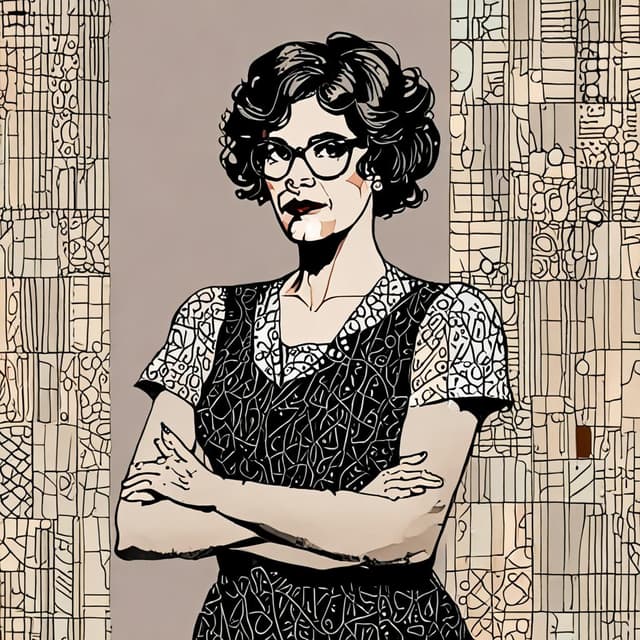
D.C. Fontana was an American science fiction author who was a leading figure in the "New Wave" movement that reshaped the genre in the 1960s and 1970s. Renowned for her intellectually ambitious and socially conscious stories, Fontana's work explored themes of artificial intelligence, first contact with alien civilizations, and the philosophical and ethical quandaries posed by rapid technological change.
Dorothy Catherine Fontana was born in 1939 in New Jersey. Growing up, she developed an early fascination with science, technology and speculative fiction, reading voraciously and writing her first short stories in her teens. After studying English literature in college, Fontana began publishing her work in pulp science fiction magazines in the late 1950s.
Her first major breakthrough came in 1963 with the publication of the novella "The Midas Plague" in the prestigious sci-fi anthology series Dangerous Visions. The story, which depicted a future society where over-abundance and mechanization had eliminated the need for human labor, immediately established Fontana as an innovative new voice in the genre.
Over the next decade, Fontana emerged as a leading figure in the "New Wave" of science fiction, which sought to move the genre beyond its pulp roots and tackle more ambitious intellectual and philosophical themes. Her 1966 novel ''Synthesis'' about the first contact with an extraterrestrial artificial intelligence was a critical smash, winning the Nebula Award.
Other acclaimed works from this period included the short story collection ''Realms of Possibility'' (1968), the dystopian novel ''The Final Machine'' (1971), and the "alien archaeology" novella "Remnants" (1973). Fontana's stories combined rigorous scientific speculation with complex sociopolitical commentary, cementing her reputation as one of the most cerebral and thought-provoking voices in science fiction.
Fontana's most famous and influential works tended to revolve around a few central themes. A keen observer of technology's impact on human civilization, she was fascinated by the philosophical and moral quandaries posed by artificial intelligence, automation, and the potential for catastrophic misuse of scientific advancements.
Her novels ''Synthesis'' and ''The Final Machine'' explored these ideas, depicting AIs that either transcended or subjugated their human creators. The short stories "Remnants" and "Communion" imagined first contact scenarios that challenged our assumptions about intelligence, consciousness and what it means to be "alien."
Another major theme in Fontana's work was the diversity and dynamism of possible alien civilizations. Stories like "The Midas Plague" and "Cradle of the Gods" envisioned radically different social structures, cultural values and modes of being that upended the "humanoid alien" tropes common in pulp sci-fi.
Though Fontana never achieved the mass popularity of contemporaries like Isaac Asimov or Arthur C. Clarke, her influence on the science fiction genre was immense. Her intellectually ambitious, socially conscious approach to storytelling became a model for later "hard" sci-fi authors, and her depictions of advanced technologies, alien cultures and the human condition remained provocative and ahead of their time.
Fontana was especially lauded for her ability to seamlessly blend scientific speculation with compelling, morally complex narratives. Her nuanced explorations of AI, first contact, and the philosophical implications of technological change have been hugely influential on subsequent generations of science fiction writers.
Fontana continued writing and publishing prolifically until her death in 1991 at the age of 52. She is remembered as one of the most important voices in the New Wave movement, and her works remain widely read and studied by fans and scholars of speculative fiction to this day.
